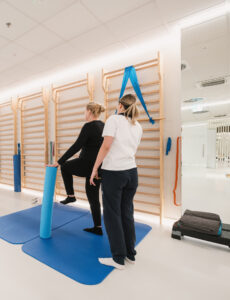
Neurosurgery
Our top experts in neurosurgery will take care of your problems and ensure your return to everyday life without pain.
We provide a comprehensive approach to patient care, with a particular focus on excellent diagnostics and the selection of the best treatment method based on the patient's general condition.
Consequently, it is sometimes necessary to perform certain examinations, tests, or procedures, and an individual approach to the patient is always chosen according to their symptoms. If a surgical procedure is ultimately required, we will ensure that it is completed as painlessly and successfully as possible.
Polyclinic Rotim
- top-level experts
- no waiting time
- state-of-the-art technology
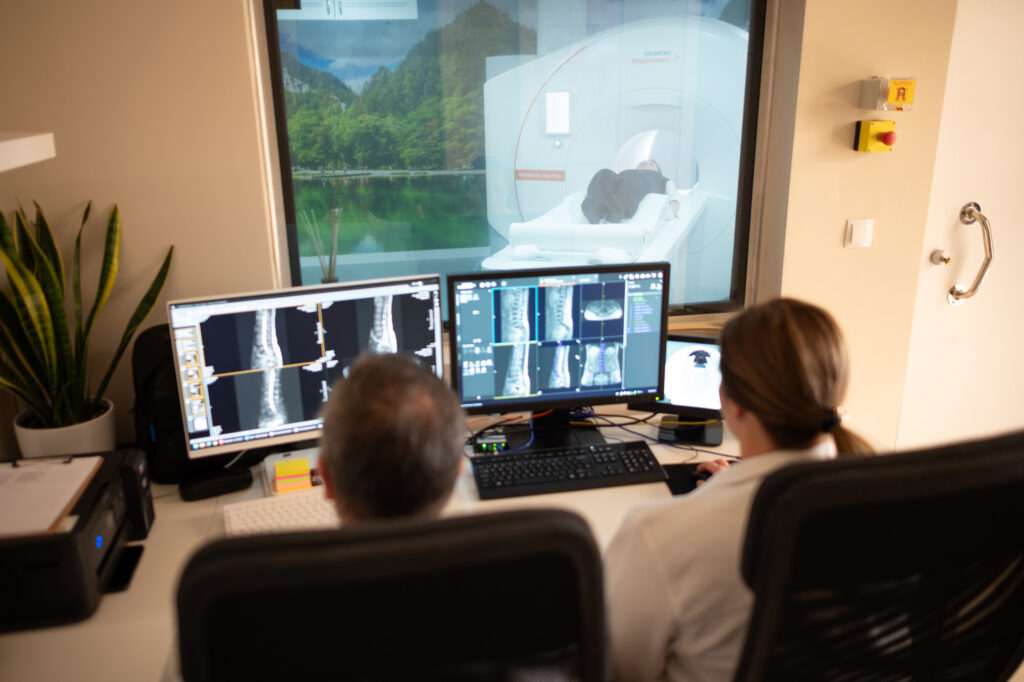
Neurosurgery involves the diagnosis, assessment, and surgical treatment of disorders of the nervous system.
At Polyclinic Rotim, we provide the most modern neurosurgical care, as we perform numerous technically demanding procedures that save lives and help adults and children with complex and serious conditions.
Our world-renowned neurosurgeons perform hundreds of surgeries each year, leading the way in the treatment of brain, spine, and nervous system conditions using innovative approaches such as awake brain surgery, robotics, intraoperative MRI, computer-assisted surgery, and many others.
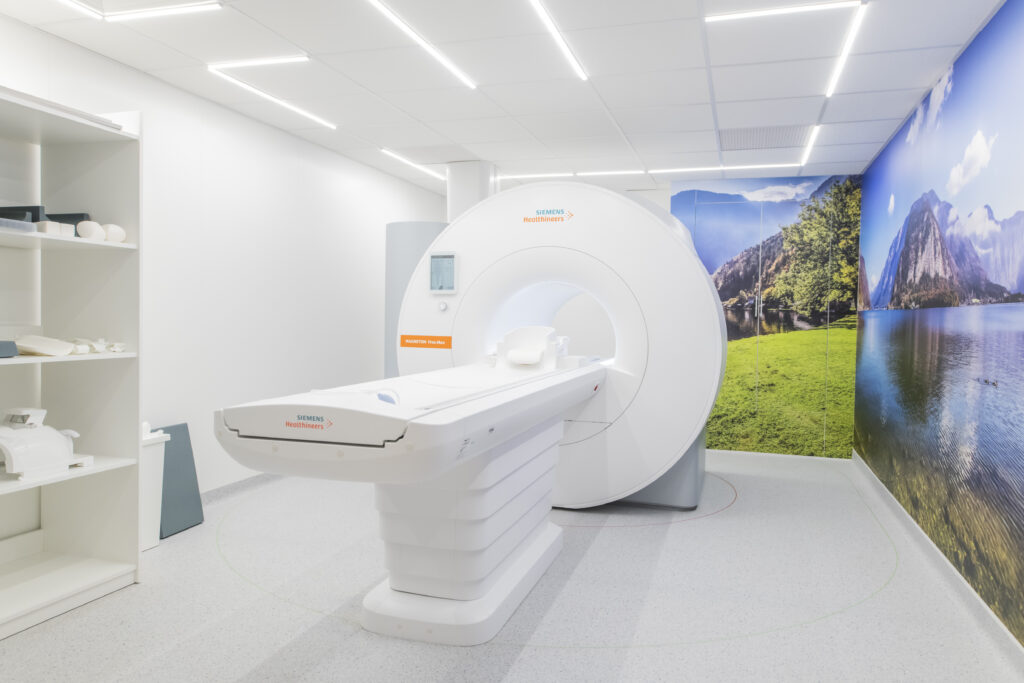
Polyclinic Rotim also has the most advanced magnetic resonance imaging (MRI) scanner – SIEMENS MAGNET FreeMax with BioMatrix technology, which greatly facilitates our neurosurgeons in making an accurate diagnosis and treatment.
Neurosurgical examination - also available online!
Don’t wait months for an appointment! Rotim Polyclinic offers neurosurgical examinations through online counseling for patients who want a quick assessment of the condition, a second opinion or an initial diagnosis without coming to the office. The examination is ideal for a preliminary evaluation of the scans (magnetic resonance imaging) and a discussion of the symptoms.
When is this examination indicated?
If you have chronic back, neck or spine pain
Numbness of the legs or arms
To evaluate the postoperative condition
When looking for a second opinion from an expert
DEGENERATIVE CHANGES IN THE ZYGAPOPHYSEAL JOINTS
At the rear of each segment of the spine, a pair of small joints connects the spinal bones, through which two-thirds of the spinal load is transmitted. Facet joints of the lumbar spine (lower back) bear a large amount of stress and weight, making them more susceptible to degenerative changes and injuries.
Degenerative spondyloarthrosis involves degenerative changes and atrophic thickening of these joints. The pain originating from this area can initially be acute (short-term) and become chronic over time. The pain can be localized in the lower back or affect one or both legs.

DEGENERATIVE CHANGES IN INTERVERTEBRAL DISCS
The movable part of the spine is connected by intervertebral discs composed of two functionally coordinated parts of the fibrous ring and the soft core. These components enable the absorption of stress as well as the elasticity of the spine. The upright posture of humans, as well as various loads and stresses in the human body, expose intervertebral discs to extremely high pressures and strains. Any change in any of these structures leads to a disturbance of the spine’s biomechanics and causes further changes in adjacent parts of the spine due to the close proximity of anatomical structures. The origin of pain in the spinal area therefore has three main sources: the muscles around the spine, other bony and joint structures of the spine, and the spinal cord nerves.
Degenerative changes in intervertebral discs arise from numerous physiological and non-physiological stressors that are visible in humans from early age and develop faster or slower throughout their lifespan.

INTERVERTEBRAL DISC HERNIATION
Intervertebral disc herniation occurs when the intervertebral disk shifts beyond its anatomical boundaries. Depending on the extent of the nucleus migration, disk herniation can result in protrusion, prolapse, extrusion, or sequestration of nuclear content. In protrusion, there is a small bulge of the fibrous ring. With prolapse, further penetration of the bulging part of the ring and the pulpy tissue causes pressure and irritation of the nerve structures.
Extrusion refers to the condition when the pulpy tissue completely breaks through the fibrous ring, and the contents come out of the disk, but are still attached to the disk. Sequestration refers to the irreversible detachment of the protruding tissue from the pulpy nucleus, creating a sequestrum that separates from the disk. A herniated disk is a condition that can occur anywhere in the spine, but most commonly occurs in the lower back. If it is a herniation of the cervical spine, it usually involves the three lower cervical vertebrae (C5 to C7).
In most of these described conditions, there is irritation or inflammation of the nerve roots of the spinal cord (radiculopathy) and sometimes of the spinal cord itself (myelopathy). As a result, pain occurs throughout the innervated area of the compressed nerve, which can lead to further loss of the nerve and the spread of pain to other parts of the body. In certain severe cases, pressure on the spinal cord can lead to paralysis such as tetraplegia, hemiparesis or hemiplegia.

LUMBAR RADICULOPATHY OR LUMBOSACRAL SYNDROME
Lumbar radiculopathy or lumbosacral syndrome is a disease that occurs at the lumbosacral joint in the lower back. The term “lumbo” refers to the lumbar vertebrae, and “sacral” refers to the sacrum, or the bone in the lower spine. This disease is caused by compression of the nerve roots of the sacral plexus (L4, L5, S1-S3) that form the sciatic nerve.
The pain can manifest as long-lasting chronic pain that increases slightly in the lumbar region of the spine, as intermittent bursts of pain, and as severe pain that intensifies with coughing, sneezing, bending or sitting. Pain can have characteristics of burning, tingling and cramping, with a characteristic increase in pain upon standing.

MYELOPATHIES
A myelopathy is a lesion of the spinal cord due to compression that can be caused by trauma, congenital stenosis, degenerative disease or disk herniation. The spinal cord contains a series of nerves located within the vertebrae. When any part of the spinal cord is compressed, it causes dysfunction of the nerves along the spinal cord, resulting in pain, loss of balance and coordination, and numbness in the area around the point of compression.
Myelopathy can occur anywhere along the spinal cord, and types of myelopathy include cervical myelopathy (in the neck), thoracic myelopathy (in the middle of the spine) and lumbar myelopathy (in the lower spine). If left untreated, myelopathy can lead to permanent spinal cord injury and nerve damage.

SPINAL STENOSIS
Lumbar spinal stenosis is a narrowing of the spinal canal in the lower back. Stenosis, meaning narrowing, can cause pressure on your spinal cord or nerves that go from the spinal cord to your muscles. Spinal stenosis can occur in any part of the spine, but is most common in the lower back. With narrowing, pain in the lower back often occurs, along with the characteristic symptom of spreading pain in the legs when moving, which stops when resting in a sitting or bent position. As the disease progresses, severe pain, cramps, and numbness in the legs may occur, even at rest, and neurological damage is also possible.
This disease has a slow progression over many years with periods of exacerbation and improvement. The disease can be diagnosed by examination with a specialist and magnetic resonance imaging of the lumbar spine.

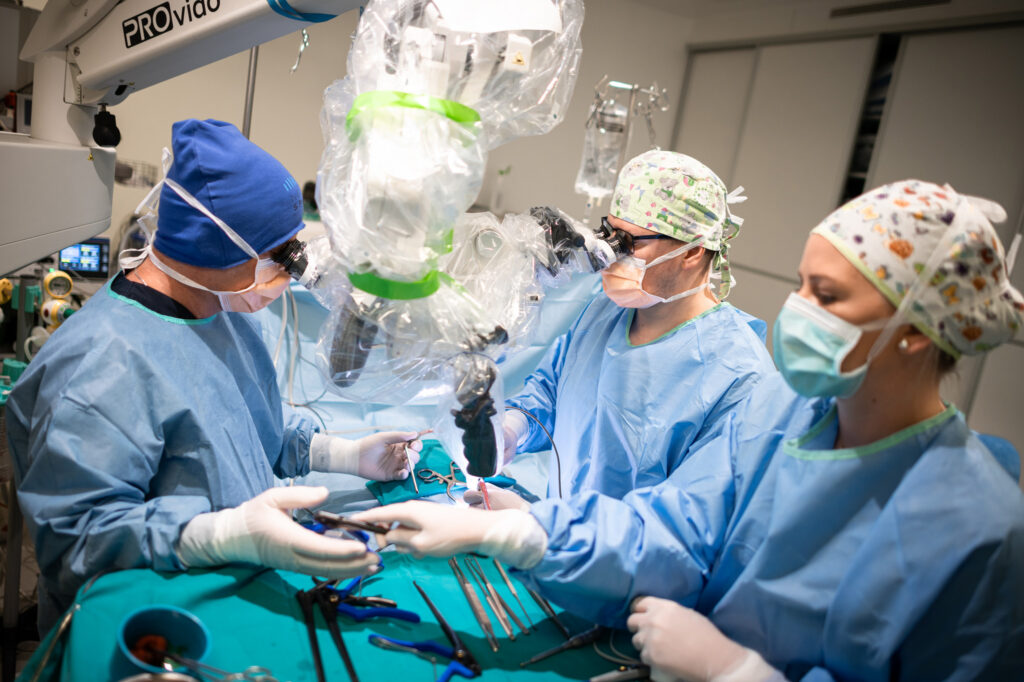
The neurosurgical team approaches each patient individually.
Make an appointment for an examination with top neurosurgery experts.
No waiting.
Leave your contact information and we will contact you as soon as possible.